
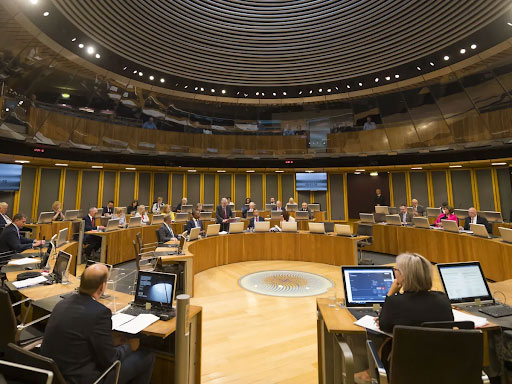
In this blog Evelyn James, a campaigner for Diverse 5050 at Women’s Equality Network (WEN) Wales, which pushes for equal and diverse representation for women in leadership in Welsh Politics, sets out why legally binding gender quotas are essential.
For decades there have been calls for equality and diversity in politics. But there remains a power imbalance in leadership and representation which has stifled progress towards gender equality.
Around the world, countries have committed to bridging their gender gaps by reforming their electoral systems leading to a more diverse public and political culture as well as better representation of women from minority groups. Research also shows that in more than 100 countries that have adopted quotas, this has directly increased women’s representation. Quotas are, in fact, the single most effective tool to increase women’s representation.
Take Ireland where they have implemented a 30% quota for women standing in the national elections (rising to 40% in 2023). As a result 40% more women were elected in 2016 compared to 2011.
Wales was a beacon of light globally for being the first nation to reach a 50:50 gender balance in its parliament back in 2003. Since then things have gone backwards and in the 2021 Senedd elections, women’s representation fell to 43%. Additionally, only three (five per cent) members of the Senedd (MSs) are from Black, Asian, or ethnic minority backgrounds, only three members openly identify as LGBTQ+ and, as no information is collected, we do not know if disabled people are represented at all.
However, there is good news from Wales. The Welsh Government, supported by Plaid Cymru, formally proposed the implementation of legislative gender quotas in June 2022 making Wales the first country in the UK to use gender quotas to drive equality in their parliament. And we have expert legal opinion showing gender quotas are within legislative competence in Wales.
The power of quotas goes beyond simply ensuring equal numbers of represented politicians: it can transform our politics. International researchshows that the increased representation of women leads to legislation on areas such as caring, mental health and domestic abuse, policy areas which male-dominated governments have been less likely to focus on. The expert panel on assembly electoral reform recognised that a more equal and diverse Senedd would lead to better decisions as well as being more reflective of the Welsh population.
To this end, we, along with the 30 organisations who support the Diverse 5050 campaign, continue to raise the issue especially as it relates to underrepresented groups such as Black, Asian women and those from Ethnic Minority communities, disabled women, LGBTQ+ women and women with other protected characteristics. Research shows that ‘combined quotas’ are best i.e. when they are designed to look at different characteristics at the same time. They also need to be intersectionally embedded, for instance, if there is a 20% quota for disabled people, the intersectional requirement could require that half of these candidates need to be men and half women.
Democracy will thrive if it becomes more representative – legally binding quotas with practical diversity measures are key to delivering that. Parliaments will better reflect the diversity of the communities they serve and ensure different perspectives and lived experiences are part of decision-making. We are committed to making this happen in Wales so that we can serve as a beacon to the rest of the UK.
You can find out more about this issue here or get in touch with Evelyn James (Evelyn@wenwales.org.uk)