
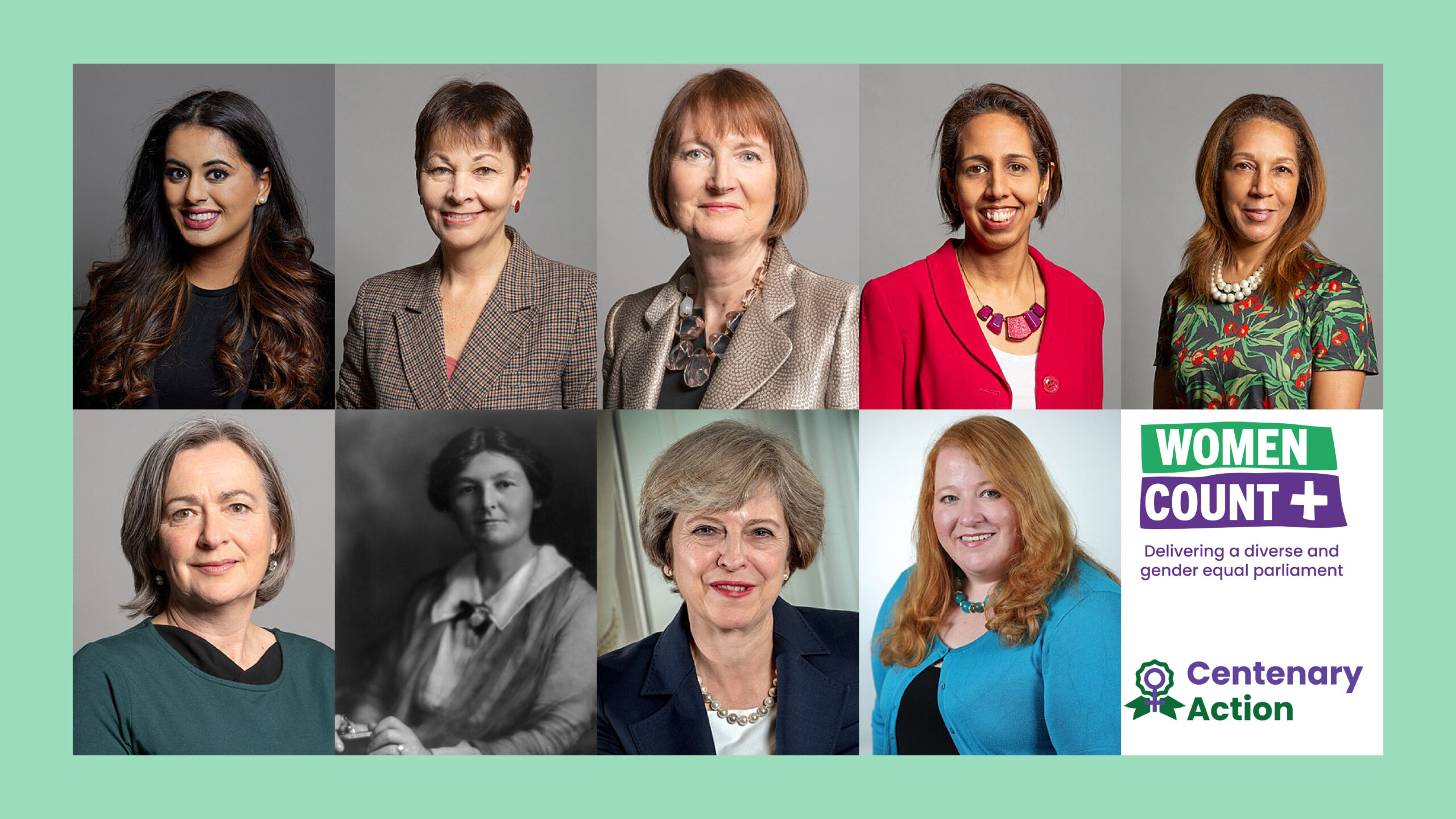
As we approach the 95th anniversary of The Representation of the People Act, which gave women the right to vote on the same terms as men, we are #celebratingwomenMPs and all they achieved for the country. Although there have only ever been 561 women MPs, and they are currently just 35% of the House of Commons, they have always punched above their weight and worked hard, often cross-party, to deliver changes that have benefited both women and society as a whole.
We wanted to highlight a few of those women MPs and the impact they have made. This is by no means a list of the most important or significant but a few who represent the great work that has been over time and goes on today.
Margaret Bondfield

First elected as a Labour MP in December 1923, the former shop worker and trade union official, became the first female cabinet minister, and the first woman to be a privy counsellor, when she was appointed Minister of Labour in the 1929–31 Labour government led by Ramsay MacDonald. Previous to becoming an MP she founded the National Federation of Women Workers (NFWW) in 1906, an organisation dedicated to the unionisation of women and defending their rights at work.
In addition to working for the improvement of the working conditions and salaries of working women, she was passionate about the issues of women’s suffrage and she helped found the Women’s Labour League in 1906, which was affiliated with the Labour Party, and became chair of the Adult Suffrage Society, which demanded full adult suffrage. At the same time, she became active in the Women’s Cooperative Guild, founded in 1883, which supported women’s suffrage and argued that women should have full equal rights with men. The Guild also played an important role in the campaigns for maternity insurance benefits, child welfare, and a minimum wage for women. Her determination allowed her to become one of modern Britain’s most significant advocates for improving the working and living conditions for women. She remains relevant today as a pioneer advocate and the first female to hold many of formerly male-dominated positions in unions and politics
Theresa May

Elected to Parliament on 1 May 1997, one of only 13 female Conservative MPs, she became the second female Prime Minister serving for the Conservatives for three years from 13 July 2016 to 24 July 2019. Her career started at the Bank of England followed by working as financial consultant for a number of years. She entered politics as a local Councillor in the London Borough of Merton before she was elected as the MP for Maidenhead. She quickly picked up shadow front bench roles before becoming Chairman of the Conservative Party where she set herself the task of reforming the Party and getting more women involved. When the Conservatives came into Government under David Cameron, she was appointed Minister for Women and Equalities.
She is a proud champion of women-friendly legislation and increased female representation in parliament. With Baroness Anne Jenkin, she helped set up Women2Win in 2005, the mentoring and pressure group which identifies the brightest and best women in the Conservative Party, supports and trains them and works to convince Conservative Associations of the benefits of putting their trust in female candidates. A whole generation of women MPs and future candidates have had their careers boosted as a result.
Munira Wilson

Munira Wilson was the campaign organiser for Guildford Lib Dems in 2004-5, before working for Nick Clegg in the first half of 2006. She spent the next decade working for Save The Children, Beating Bowel Cancer and Novartis. In 2019 she was selected to replace Sir Vince Cable as the Liberal Democrat candidate in his Twickenham constituency, and went on to win the seat with 56.1% of the total vote at the 2019 general election. Munira was the Liberal Democrat Spokesperson for Health and Social Care between January 2020 and October 2021. At present she is the Spokesperson for Education and promotes policies such as better mental health services for children and an increase in funding for free school meals. She pushes for higher maternity pay and an increase in paternity leave, and in 2022 she introduced the Kinship Care Bill in Parliament. The purpose of the Bill is to provide government support for the family friends and relatives of a child in crisis, who take them in and keep them out of the foster care system.
Munira is on the Committee overseeing the Protection From Sex Based Harassment In Public Bill and in May 2021 signed an open letter to the government from Stylist Magazine calling on the government to act on ending male violence against women and girls.
Anum Qaisar

Born in Scotland, after her family moved from Manchester where her Pakistani grandparents had emigrated to in the 60s, she originally became active in Labour politics but, because of her stance on independence, left Labour to join the SNP.
Anum became an active member of the SNP and worked for various SNP Parliamentarians. She then retrained as a Teacher of Modern Studies and Politics at the University of Strathclyde. She taught at several schools throughout her placements and as a qualified teacher. After Airdrie and Shotts MP, Neil Gray, decided to stand for the Scottish Parliament, Anum was selected as the SNP’s candidate for the subsequent Parliamentary by-election. With 46.4% of the vote, she was elected with an 8% majority. She sits on the Women & Equalities Committee and is the SNP Spokesperson for International Development. She has a strong interest in issues centring around social justice and equality, violence against women and girls, international relations, feminist foreign policy, and many other intersectional issues.
Liz Saville-Roberts

Liz Saville Roberts was first elected in 2015, the first woman to represent Dwyfor Meirionnydd and Plaid Cymru’s first female MP. She retained the seat at both the 2017 and 2019 snap elections with a significantly increased share of the vote. In 2017, she was appointed Plaid Cymru Westminster Group Leader and speaks for the party on Home Affairs, Transport, Women and Equalities, Business, Energy and Industrial Strategy, and Justice.
Originally from Eltham in south London, Liz learnt Welsh whilst at university in Aberystwyth. She previously worked as a journalist in London and north Wales, and then as a further education lecturer with Coleg Meirion Dwyfor where she led on Welsh language education. Prior to her election to Parliament, Liz was a Gwynedd County Councillor between 2004 and 2015, representing Morfa Nefyn, Pen Llŷn.
Caroline Lucas

Caroline Lucas was elected as the first leader of the Green Party in 2008 and went on to represent the constituency of Brighton Pavilion in the 2010 general election, becoming the party’s first MP. Previous to joining the UK parliament she was first elected as a Member of the European Parliament for the South East England Region at the 1999 elections, the first year the election was by proportional representation, a year that the Green Party gained 7.4% of the vote).
As well as supporting women’s rights organisations locally she kick started a parliamentary debate on the media’s objectification of women. She defied the Westminster dress code and wore a NO MORE PAGE 3 t-shirt to highlight the problem in Parliament and directly asked the Prime Minister to back the campaign. She arranged for the Media Minister to meet with women’s groups to talk about the importance of training in media sexism and to underscore the link between women’s portrayal in the press and violence against women and girls. When the newspaper hacking scandal led to the establishment of a new press regulatory regime, she successfully called for women’s rights groups to be allowed to make formal complaints about media coverage that is sexist.
Naomi Long

On 26 October 2016, Naomi was elected the first female leader of Alliance and reaffirmed her party’s commitment to building a “united, open, liberal and progressive” society revealing that their legislative priorities would be the harmonisation and strengthening of equality and anti-discrimination measures and the introduction of civil marriage equality.
She worked for almost ten years in the engineering industry and was politically active from her early twenties. She joined Belfast City Council as an Alliance Party councillor in 2001 and was elected to the Northern Ireland Assembly as MLA for East Belfast in 2003. She served as Lord Mayor of Belfast from 2009 to 2010 and became the first Alliance MP elected to Westminster, as Member of Parliament for East Belfast in 2010, unseating the then First Minister, Peter Robinson. In May 2016, Naomi returned to the Northern Ireland Assembly as MLA for East Belfast, before becoming Leader of Alliance. Since then, she has presided over the most successful elections in Alliance’s history, with the 2022 Assembly election seeing the party’s representation more than double; the 2019 European poll seeing her elected as Alliance’s first ever MEP; and the UK General Election seeing the party elect Alliance Deputy Leader, Dr Stephen Farry, as MP for North Down.
Harriet Harman

Following a career working in the field of legal and human rights, Harriet was elected MP for Peckham (now Camberwell and Peckham) in a 1982 by-election when she was seven months pregnant. She joined as one of only 10 Labour women and into a Parliament that was 97% male. She immediately set up the first Parliamentary Labour Party Women’s Group.
She continued her work for women in the Labour Party, firstly campaigning for reserved places for women in the elected Shadow Cabinet and then fighting for more Labour women MPs through ‘women-only shortlists’. The 1993 Labour Party Conference introduced the ‘women-only shortlists’ in 50% of all target seats rule which led to the election of 101 Labour women MPs in 1997. In her government roles she continued her relentless focus on improving the socio-economic and human rights of women and other discriminated groups. In 2010 the Equality Bill that she had introduced became law, distilling previous pieces of legislation into one and strengthening reporting around issues such as the pay gap, allowing positive action and extending the period during which women-only shortlists are allowed.
Harriet is now Mother of the House, after 40 years in Parliament, throughout which she has fought relentlessly for change for women.
Helen Grant

Helen is the first black woman to be elected as a Conservative MP. She was elected as MP for Maidstone and The Weald in 2010, succeeding Ann Widdecombe.
She first served in government as jointly Parliamentary Under-Secretary of State for Women and Equalities and Parliamentary Under-Secretary of State for Justice during which time, she was one of the three ministers responsible for taking the ‘Marriage (Same Sex Couples) Act 2013 through Parliament. She later became Minister for Sport and Tourism, a post she held until after the 2015 general election.
In January 2021, she was appointed as Special Envoy of UK Prime Minister Boris Johnson on Girls’ Education, leading the UK’s efforts internationally to ensure all girls get 12 years of quality education, driving a global campaign to improve learning and get 40 million more girls into school around the world by 2025.